




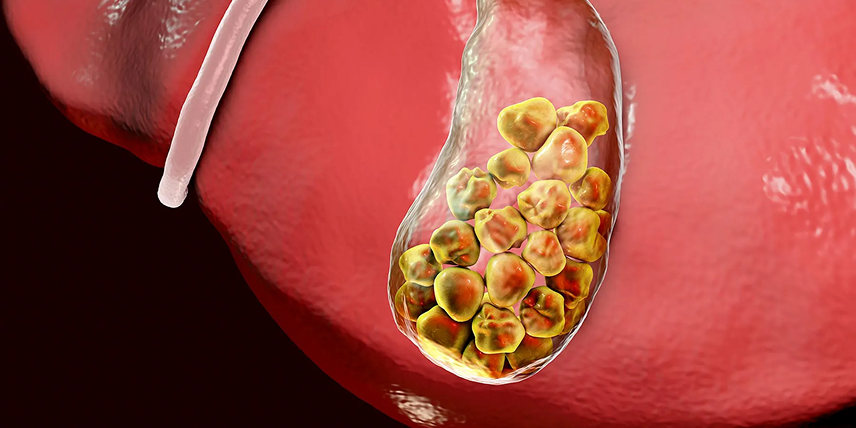
Gallstone
Gallstones are hard, stone-like deposits that form inside the gallbladder, a small organ located beneath the liver that helps in digestion by storing bile. These stones develop when bile contains too much cholesterol or bilirubin, or when the gallbladder does not empty properly. Gallstones can vary in size—from very small grains to larger stones—and may be present as a single stone or multiple stones.
Many people with gallstones may not experience symptoms initially. However, when a stone blocks the bile duct, it can cause severe pain known as a gallstone attack. Common symptoms include sudden and intense pain in the upper right abdomen, pain radiating to the back or right shoulder, nausea, vomiting, bloating, indigestion, and sometimes fever or jaundice. If left untreated, gallstones can lead to serious complications such as gallbladder infection, inflammation, or pancreatitis. This technique involves small incisions and offers significant benefits such as less pain, minimal scarring, faster recovery, and a shorter hospital stay compared to traditional open surgery. Treatment depends on the severity of symptoms and the size and number of stones. Asymptomatic gallstones may not require immediate treatment. However, symptomatic gallstones are best treated with surgical removal of the gallbladder. The most commonly recommended procedure is laparoscopic cholecystectomy, a minimally invasive surgery that safely removes the gallbladder. Blood tests may also be performed to check for infection, inflammation, or bile duct blockage. Accurate diagnosis helps determine the most appropriate treatment plan for each patient.